
News
Personal Investment Accounts: New Opportunities for the Polish Economy
14
How can Poles be encouraged to save for the long term while simultaneously supporting the development of the domestic economy? One of the proposed solutions is the introduction of Personal Investment Accounts (OKI).
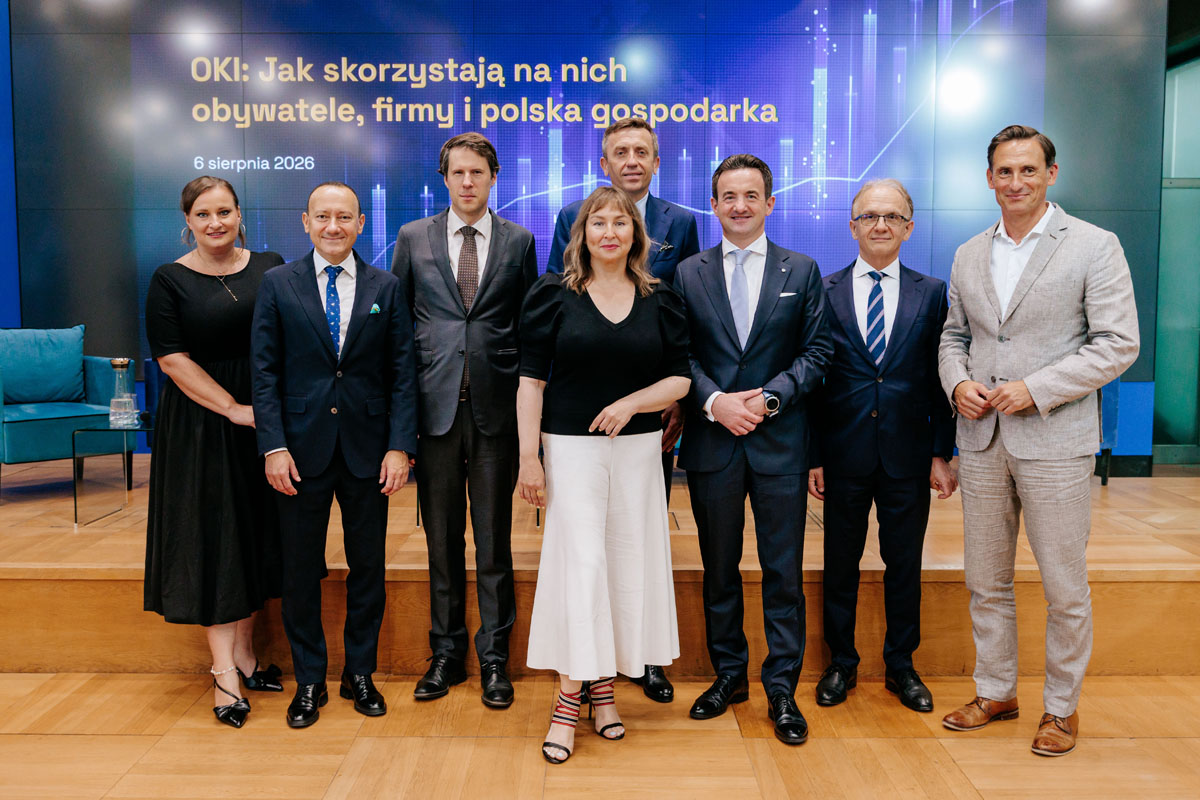
The potential of this initiative was discussed during the conference “OKI: How Citizens, Companies and the Polish Economy Can Benefit”. Their introduction could channel billions of zlotys in savings into the capital market, creating benefits for both investors and businesses.
Poles still prefer to keep their savings in cash and bank deposits. According to data from the Polish Development Fund (PFR), at the end of 2025 nearly PLN 1.9 trillion was held in these forms, representing almost half of the financial assets of Polish households. According to participants of the conference held at the headquarters of the Warsaw Stock Exchange, the use of tools such as OKI could benefit both savers, who would gain additional opportunities for long-term investing, and companies, which would enjoy greater access to growth financing.
“As many Poles as possible should benefit from the success of Polish companies and the capital market. That is why it is so important that more people not only save but also invest. In this way, domestic capital can support the growth of Polish businesses and the economy. In this context, the swift implementation of OKI is extremely important, as it is intended to encourage society to invest for the long term. Fully unlocking the potential of this solution, however, requires building investor trust, simplifying regulations and further strengthening financial education,” said Tomasz Bardziłowski, President of the Management Board of the Warsaw Stock Exchange.
The discussion on OKI also addressed issues related to the future of the Polish economy. GDP growth of 3.5% in the first quarter of 2026 confirms the economy’s strong condition, while also highlighting the need to mobilise capital that will support further development and investment.
“Modern economic policy must create better conditions for investing so that Poles can participate in economic success not only through well-paid employment but also through opportunities to invest and build their own financial security. This is precisely why, together with social partners, we have developed Personal Investment Accounts,” said Andrzej Domański, Minister of Finance and Economy.
An important part of the event was the presentation “OKI: Swedish Experience and the Polish Perspective”, during which Maciej Bitner, Head of Regulatory Analysis at GPW, discussed the operating principles of Personal Investment Accounts and their key assumptions. Referring to the experience of the Swedish ISK model, he noted that OKI is designed to support long-term investing through preferential tax treatment and broad access to financial instruments. He also pointed out that the structure of the Polish solution is, in many respects, more attractive to investors than the ISK model.
The conference also featured the launch of the report “OKI: A Strong Growth Impulse for the Polish Capital Market”, prepared by PKO Bank Polski Brokerage House. The key findings were presented by Kamil Kliszcz, Deputy Director of PKO Bank Polski Brokerage House. According to the report, the development of OKI could have a significant impact both on the Polish capital market and on the way Poles allocate their savings:
- OKI will become an important source of domestic capital for the equity market, with assets accumulated within the programme potentially exceeding PLN 100 billion within three years and almost PLN 200 billion within five years.
- The role of retail investors on the Warsaw Stock Exchange will increase. PKO Bank Polski Brokerage House estimates that between 2027 and 2030 as much as PLN 23 billion gross (PLN 15 billion net) could flow into Polish equities.
- OKI will support the long-term development of the capital market by increasing the share of capital market investments within the savings structure of Polish households.
- As the programme develops, investors may increase the proportion of higher-return assets in their portfolios. According to forecasts, equities will account for approximately 26% of inflows into OKI by 2030 and 32% by the following year.
- Within the first three years, OKI could attract 2.1 million participants.
“The scale of OKI’s success will depend on a number of factors: effectively convincing customers that it is a valuable solution, designing products in a customer-friendly format, and ensuring cooperation among all market participants, including regulators,” emphasised Kamil Kliszcz, Deputy Director of PKO Bank Polski Brokerage House.
The conference concluded with an expert panel discussion titled “What Opportunities Does OKI Create?”, moderated by Dr Katarzyna Sekścińska, Professor at the University of Warsaw. Participants included Dariusz Adamski, Vice-Chair of the Polish Financial Supervision Authority (KNF), Małgorzata Rusewicz, President of the Polish Investment Funds and Asset Management Association (IZFiA), Jarosław Dominiak, President of the Polish Individual Investors Association (SII), Waldemar Markiewicz, President of the Polish Association of Brokerage Houses (IDM), and Samer Masri, Director of PKO BP Brokerage House.
The panellists highlighted both the challenges and opportunities associated with implementing OKI. Jarosław Dominiak stressed the importance of financial education and effective communication in building interest in the new instrument. Samer Masri pointed to the potential of OKI to broaden participation in investing by combining banking products and stock exchange instruments within a single solution. In his view, the product’s success will depend primarily on a simple onboarding process and investor education.
Among the opportunities associated with the implementation of OKI, participants also highlighted the possibility of attracting younger generations to investing. As Waldemar Markiewicz noted, the solution could contribute to changing habits related to saving and capital allocation.
The discussion also addressed the accessibility and attractiveness of the product for customers. Dariusz Adamski emphasised the importance of ready-made, appropriately balanced investment portfolios, while Małgorzata Rusewicz underscored the need for clear and transparent communication of the operating principles of OKI and the benefits offered by the solution.
The event was organised by the Warsaw Stock Exchange in cooperation with its Main Partner, PKO BP Brokerage House. Substantive support was also provided by the Polish Investment Funds and Asset Management Association (IZFiA), the Polish Association of Brokerage Houses (IDM), and the Polish Individual Investors Association (SII).
Galeria


